CJC-1295 Research Overview: A GHRH Analog Explained
A research-focused overview of CJC-1295, a GHRH analog studied for the GH/IGF-1 axis, including the role of DAC, handling, storage and purity checks.
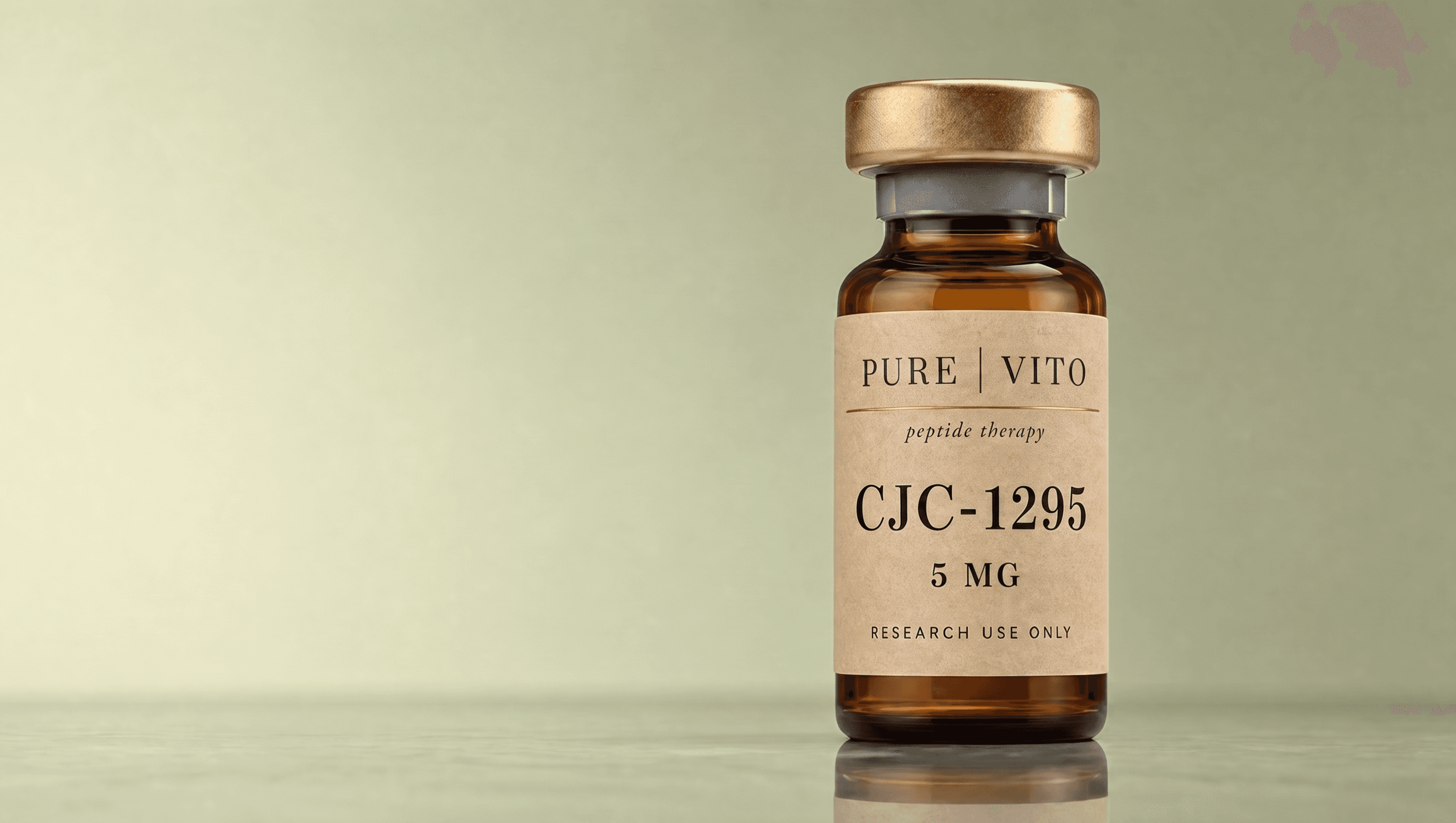
CJC-1295 is a synthetic peptide studied in laboratory research as an analog of growth-hormone-releasing hormone (GHRH). Investigated for its interaction with the GH/IGF-1 axis, CJC-1295 is a common reference compound in preclinical work alongside other research peptides. This overview summarises what published studies report, strictly for scientific and educational context.
Nothing here is medical, veterinary or dosing guidance. All statements describe controlled laboratory investigations rather than any human application.
What is CJC-1295?
CJC-1295 is a modified fragment based on the GHRH sequence. In research literature it is described in two forms: with and without a drug affinity complex (DAC). The DAC modification is a key distinguishing feature and is the reason the two forms show markedly different reported half-lives in study models.
CJC-1295 with and without DAC
- With DAC: designed to bind serum albumin, which in study models is associated with a substantially extended circulating half-life.
- Without DAC (sometimes called modified GRF 1-29): reported to have a much shorter half-life in the same model systems.
Mechanism of action
As a GHRH analog, CJC-1295 is studied for its ability to bind GHRH receptors on pituitary somatotroph cells in experimental systems. Receptor engagement in these models is associated with stimulation of the GH/IGF-1 axis, prompting GH release and downstream changes in insulin-like growth factor 1 (IGF-1). Because CJC-1295 acts through the GHRH pathway rather than the ghrelin receptor, it is often compared with secretagogues to study complementary signalling.
Research context
Preclinical and pharmacokinetic studies have examined CJC-1295 in relation to GH pulsatility, IGF-1 dynamics and the half-life effects of DAC. These are observations within defined experimental designs and do not demonstrate benefit in humans. Laboratories frequently reference third-party lab results to confirm identity and distinguish DAC from non-DAC material before experiments.
Handling and storage
CJC-1295 is typically supplied as a lyophilised powder. Standard laboratory practice stores the sealed powder frozen (around -20 C), protected from light and moisture, with reconstituted solutions refrigerated and used within a limited period. Repeated freeze-thaw cycles are generally avoided to preserve integrity. A peptide reconstitution calculator can help plan solvent volumes accurately.
- Keep lyophilised powder cold, dry and dark.
- Reconstitute with a suitable sterile solvent.
- Aliquot to reduce freeze-thaw cycles.
Purity and quality
Because DAC and non-DAC forms differ in mass, analytical verification is especially important. HPLC and mass spectrometry are used to confirm identity, purity and which variant is present. Reviewing a certificate of analysis helps ensure that observed effects in CJC-1295 studies reflect the intended compound.
Key takeaways
- CJC-1295 is a GHRH analog studied on the GH/IGF-1 axis.
- The DAC modification markedly extends reported half-life in study models.
- It works through GHRH receptors, distinct from ghrelin-receptor secretagogues.
- Cold, dry, dark storage and analytical verification support reproducibility.
- All described effects are experimental observations, not human outcomes.
Research use disclaimer
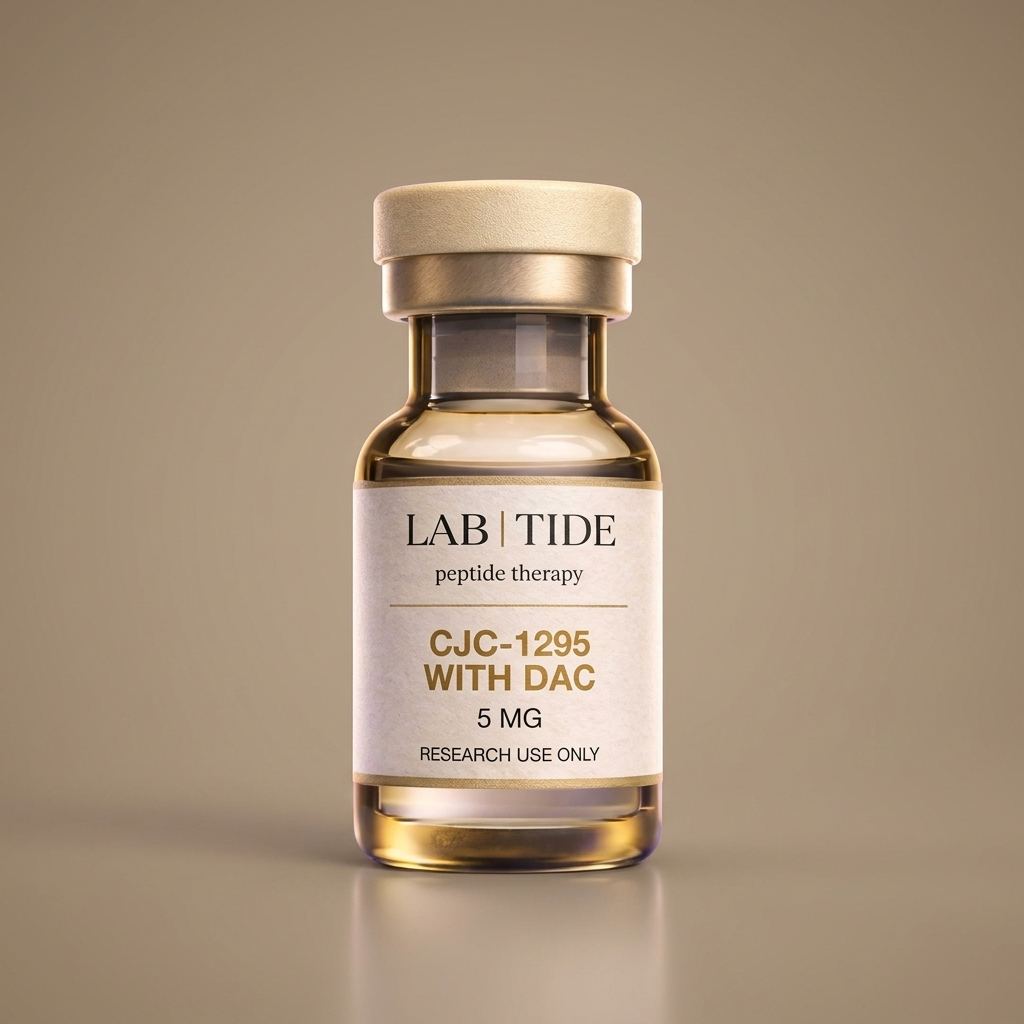
CJC-1295 is supplied for laboratory research use only. It is intended for in-vitro laboratory research and is not for human or veterinary use, not for consumption, and not a medicine. Nothing here is medical or dosing advice. For laboratory research use only; not for human consumption.
About this topic
Compiled by
Scientific basis
Based on peer-reviewed scientific literature and research data.
Last reviewed
21 August 2026