Ipamorelin Research Overview: Peptide Science Explained
An evidence-based overview of ipamorelin, a selective growth-hormone secretagogue studied in preclinical research, with handling, storage and purity notes.
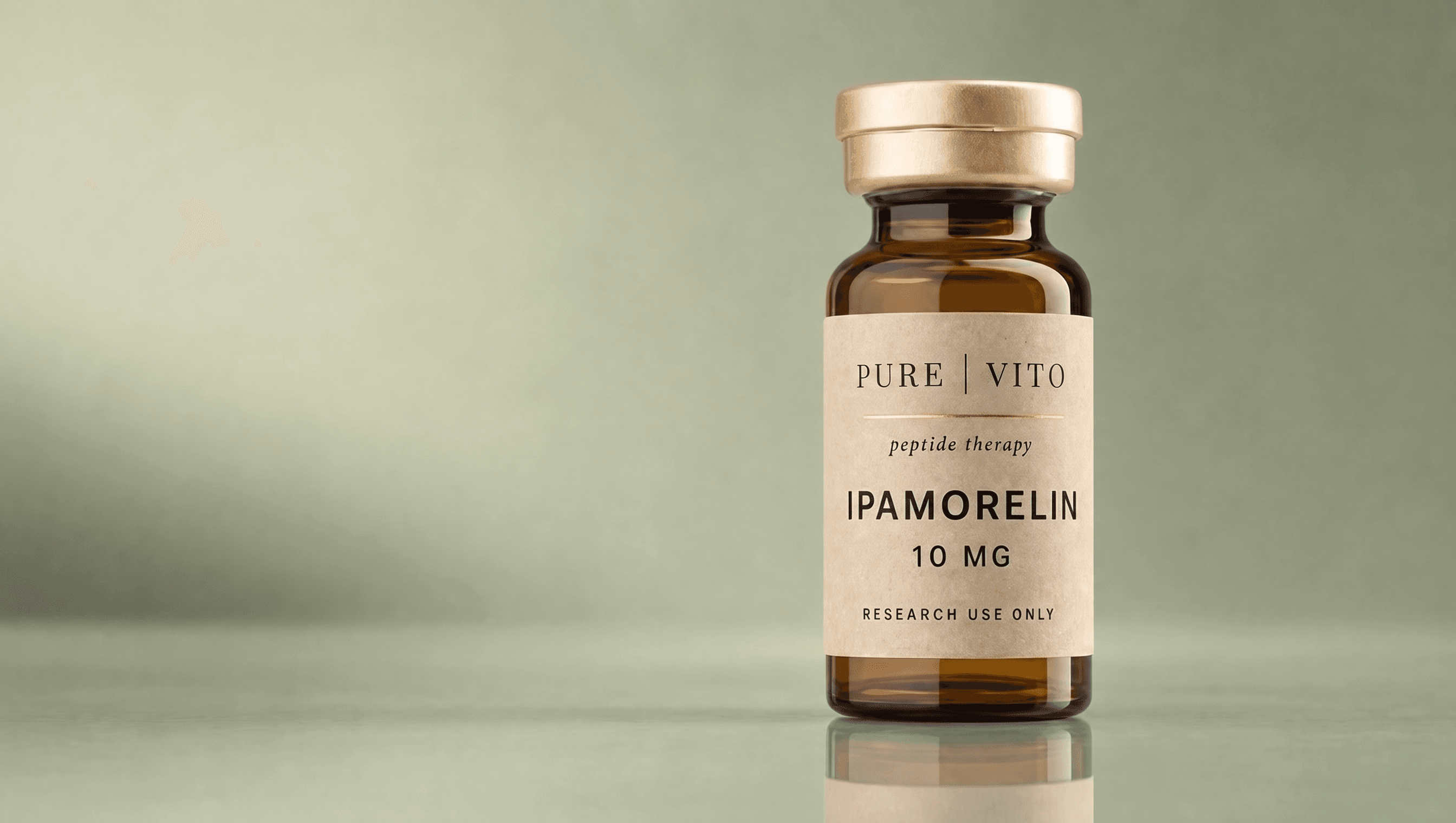
Ipamorelin is a synthetic pentapeptide widely used as a reference compound in laboratory studies of the growth-hormone (GH) axis. Classified as a selective GH secretagogue and ghrelin-receptor agonist, ipamorelin is frequently examined in preclinical and in-vitro research alongside other research peptides. This overview summarises what published studies describe, strictly for scientific context.
The information below is educational and does not constitute medical, veterinary or dosing guidance. All descriptions refer to controlled laboratory settings only.
What is ipamorelin?
Ipamorelin (sequence Aib-His-D-2-Nal-D-Phe-Lys-NH2) is a short peptide first described in the late 1990s. In research literature it is characterised as one of the most selective GH secretagogues, meaning that in model systems it has been reported to stimulate GH release with comparatively little effect on other pituitary hormones such as cortisol or prolactin. This selectivity is a key reason ipamorelin is used as a research tool for studying GH-release pathways.
Mechanism of action
In experimental models, ipamorelin binds the growth-hormone secretagogue receptor (GHS-R1a), the same receptor targeted by the endogenous peptide ghrelin. Receptor activation in these studies is associated with pulsatile GH release from pituitary cells. Researchers use ipamorelin to probe how ghrelin-receptor signalling influences the somatotropic axis in vitro and in animal models. Because ipamorelin does not act as a GHRH analog, it is often compared with GHRH-based peptides to dissect complementary signalling routes.
Selectivity in research contexts
Reported selectivity for GH release, with limited impact on adrenocorticotropic hormone and prolactin in the cited models, makes ipamorelin attractive for isolating GH-specific effects in study designs.
Research context
Preclinical investigations have examined ipamorelin in relation to GH pulsatility, somatotroph signalling and, in some animal models, endpoints such as gastrointestinal motility. These findings are observations within specific experimental systems and are not evidence of any human benefit. Laboratories comparing secretagogues frequently reference third-party lab results to confirm compound identity before study work begins.
Handling and storage
As a lyophilised peptide, ipamorelin is typically stored sealed and protected from light. Common laboratory practice keeps the powder frozen (around -20 C) for long-term storage, with reconstituted solutions refrigerated and used within a short window to limit degradation. Repeated freeze-thaw cycles are generally avoided. A peptide reconstitution calculator can support accurate solvent volume planning for experiments.
- Store lyophilised powder cold and dark.
- Reconstitute with an appropriate sterile solvent.
- Aliquot to minimise freeze-thaw cycles.
Purity and quality
Reproducible research depends on well-characterised material. Analytical methods such as HPLC and mass spectrometry are used to verify the identity and purity of ipamorelin. Reviewing a certificate of analysis and independent testing helps laboratories ensure that observed effects reflect the intended compound rather than impurities.
Key takeaways
- Ipamorelin is a selective GH secretagogue and ghrelin-receptor (GHS-R1a) agonist.
- It is studied in preclinical and in-vitro research on the GH axis.
- Reported selectivity makes it a useful reference tool for GH-release studies.
- Cold, dark storage and purity verification support reproducibility.
- All described effects are experimental observations, not human outcomes.
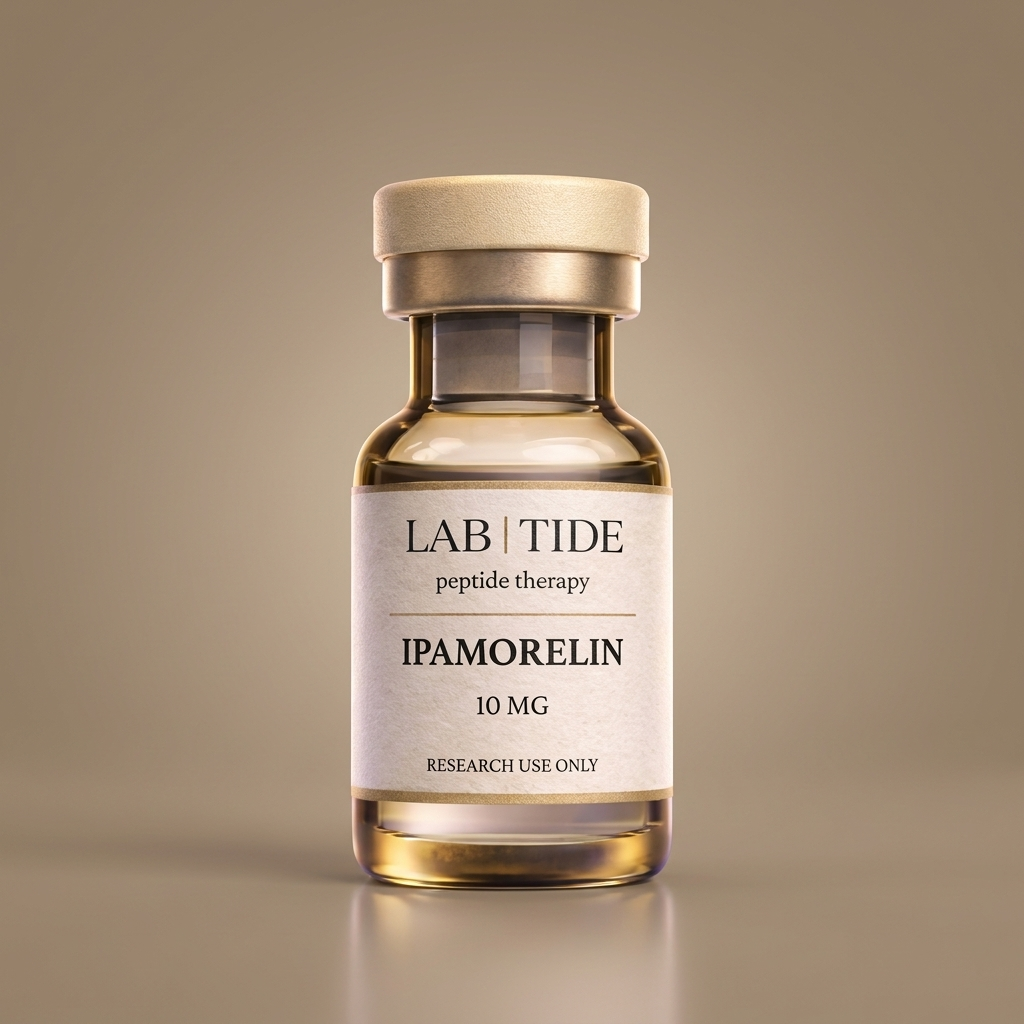
Research use disclaimer
Ipamorelin is supplied for laboratory research use only. It is intended for in-vitro laboratory research and is not for human or veterinary use, not for consumption, and not a medicine. Nothing in this article is medical or dosing advice. For laboratory research use only; not for human consumption.
About this topic
Compiled by
Scientific basis
Based on peer-reviewed scientific literature and research data.
Last reviewed
21 August 2026