Semaglutide: Pharmacology & Research Overview
A concise research reference on semaglutide's mechanism, pharmacokinetics, and laboratory handling.
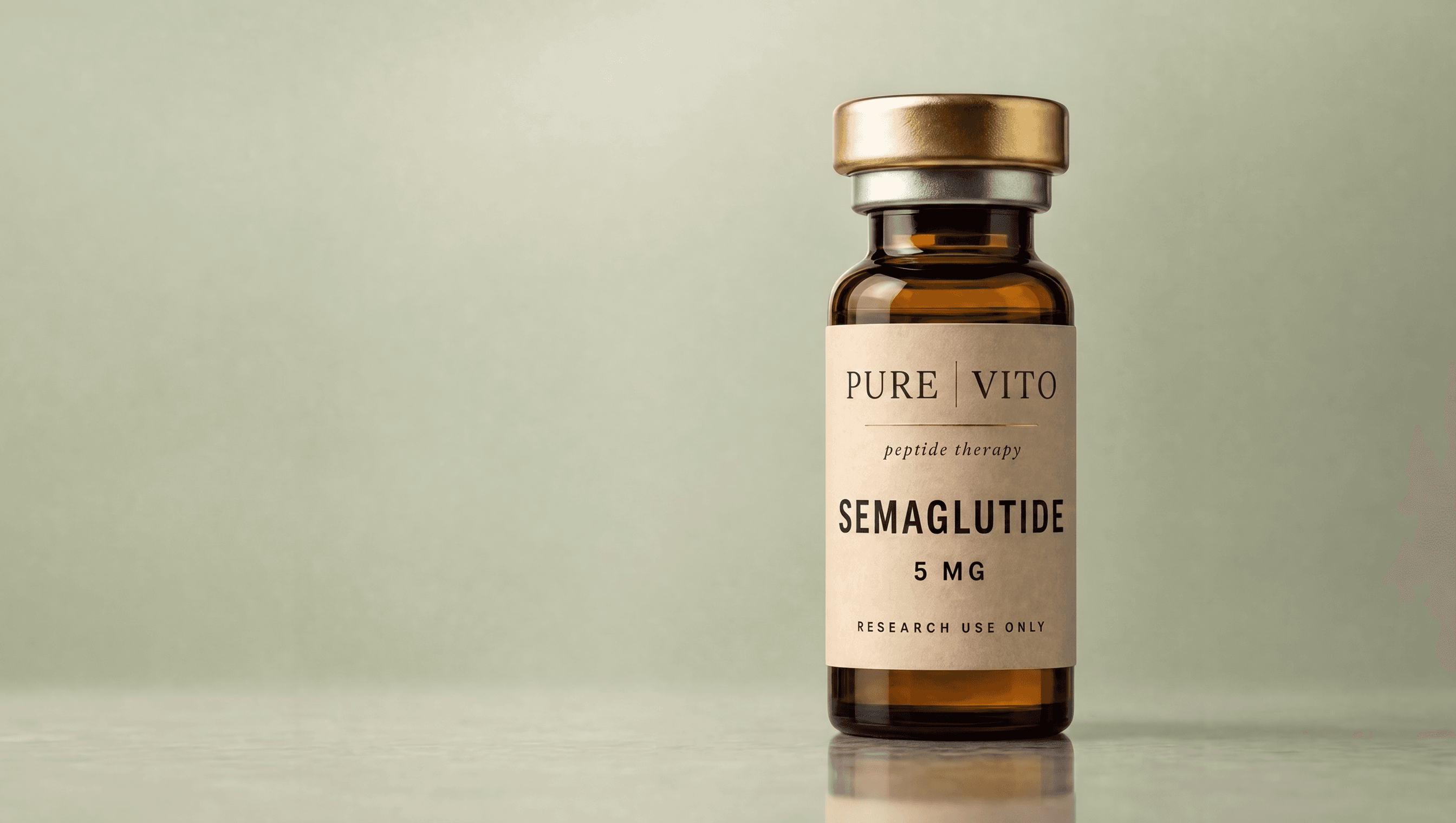
This overview summarizes the current scientific understanding of semaglutide, a glucagon-like peptide-1 (GLP-1) receptor agonist. It is intended as a research reference and does not constitute medical advice.
Mechanism of action
Semaglutide is a structural analogue of human GLP-1 with ~94% sequence homology. It binds and activates the GLP-1 receptor, potentiating glucose-dependent insulin secretion while suppressing glucagon release. Amino-acid substitutions and a C-18 fatty-acid chain extend its half-life to roughly one week.
Pharmacokinetics
Following subcutaneous administration, semaglutide reaches peak plasma concentrations within 1–3 days. Albumin binding reduces renal clearance and enzymatic degradation, supporting once-weekly dosing. Steady state is reached after approximately 4–5 weeks of consistent administration.
Research context
Across peer-reviewed literature, GLP-1 receptor agonists have been studied for glycemic regulation and metabolic endpoints. Findings should always be interpreted within the design and population of each individual study.
Handling and storage
Laboratory-grade peptides are sensitive to temperature, light, and repeated freeze–thaw cycles. Reconstituted material should be stored refrigerated and protected from light. Always follow the certificate of analysis for lot-specific guidance.
Key takeaways
Semaglutide is a long-acting GLP-1 receptor agonist.
Its extended half-life supports once-weekly dosing schedules in study protocols.
Proper cold-chain handling preserves peptide integrity.
About this topic
Compiled by
Scientific basis
Based on peer-reviewed scientific literature and research data.
Last reviewed
21 August 2026